Fluted Wall Panels in Malaysia: Uses, Benefits and Design Ideas
March 24, 2026
Wall Cladding Malaysia: A Practical Guide to Materials, Costs, and the Best Pick for Your Project (2026)
May 15, 2026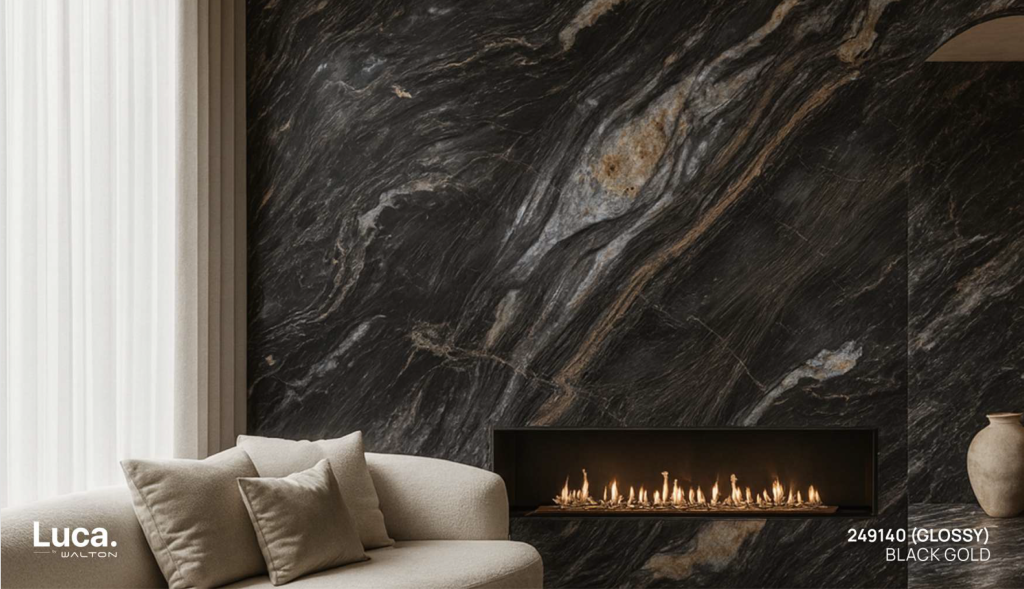
Most comparisons of sintered stone vs quartz focus on kitchen countertops, and that’s useful if that’s what you’re specifying. But for architects, designers, and renovation clients in Malaysia who are looking at these materials for feature walls, ceilings, and architectural finishes, the calculation changes entirely. Weight, thickness, UV stability, and installation behaviour all become more important than the countertop-focused comparisons you’ll find in most guides.
The short answer: for wall panels and architectural finishes in Malaysia, sintered stone is the stronger choice. For indoor countertops where budget matters more than heat or UV performance, quartz wins on value. The full picture is more nuanced than that, so read on.
This guide covers sintered stone vs quartz from both angles, with a dedicated focus on wall panel and interior finishing applications. We’ll also cover how sintered stone compares to granite and porcelain, where each material actually performs best, and the specific numbers (weight, thickness, heat tolerance) that matter in Malaysian projects.
A note on the figures used in this guide: The technical numbers below (heat resistance, weight, hardness, composition percentages) reflect documented industry properties of sintered stone and engineered quartz as material categories, drawn from standard literature across major manufacturers in the category. For Luca. StoneX-specific tolerances, certifications, and ratings, see the Luca. StoneX product page or request the technical data sheet directly from Walton Interiors.
What Is Sintered Stone?
Sintered stone is made by compressing natural minerals (mainly silica, feldspar, and natural oxide pigments) under extreme heat (over 1,200°C) and pressure. The process mimics how natural stone forms underground over thousands of years, but in a controlled factory environment.
The result is a dense, non-porous slab that’s exceptionally hard and resistant to heat, scratches, UV exposure, and chemical staining. Because there’s no resin used in the process, sintered stone can handle direct heat and prolonged sunlight without yellowing or warping.
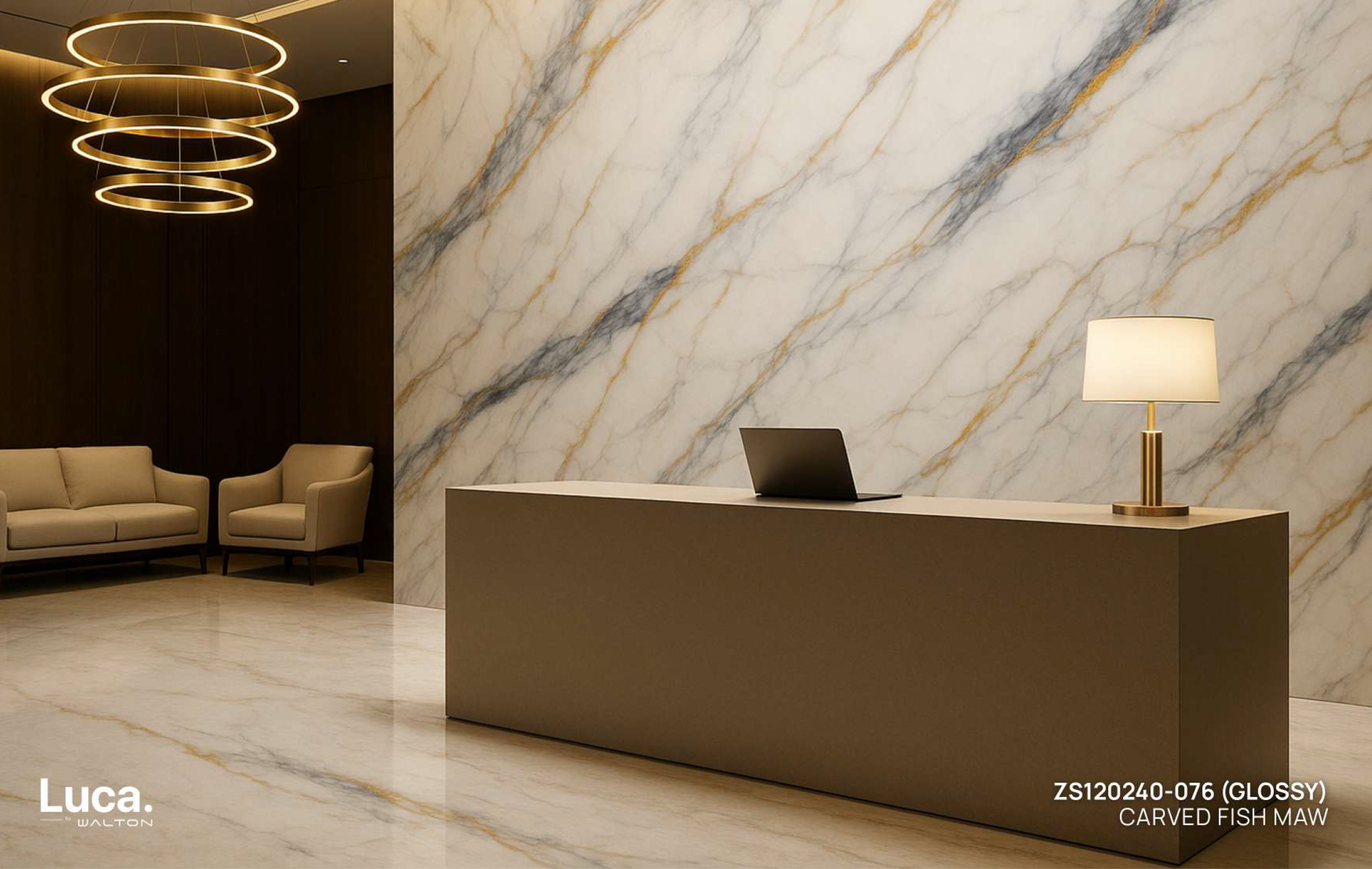
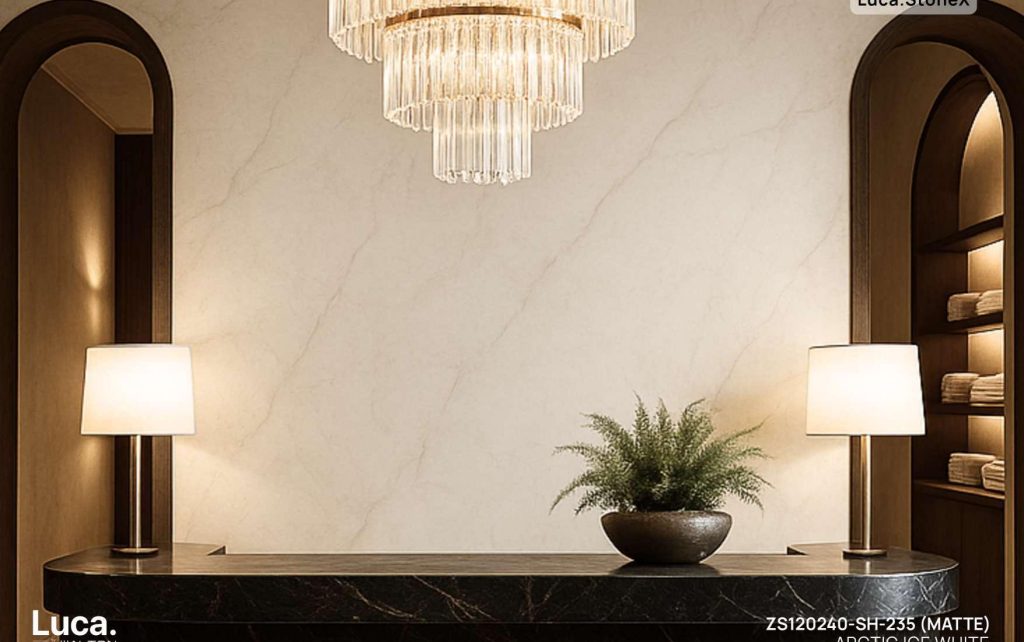
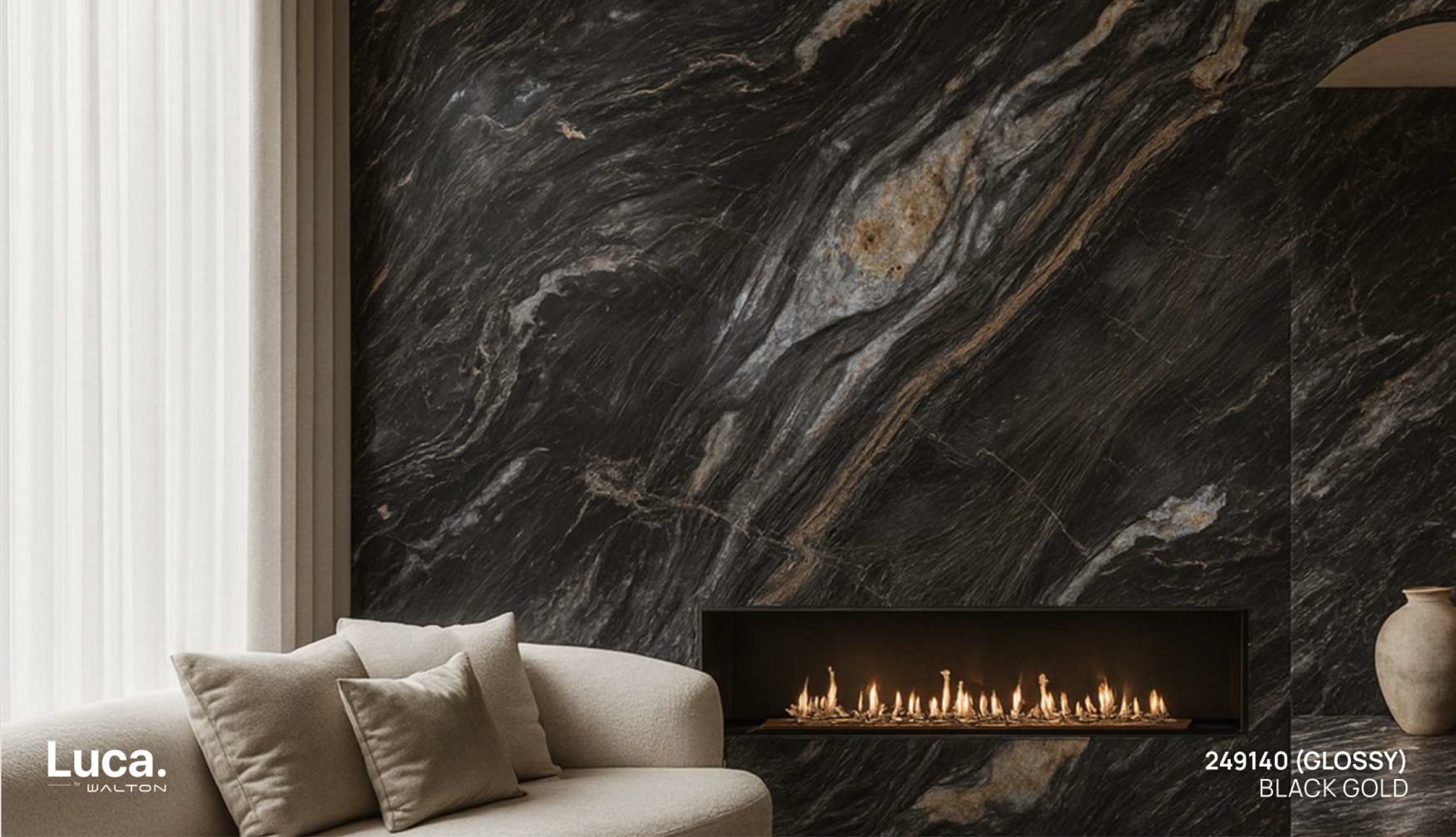
In Malaysia, sintered stone has gained popularity as a premium surface for kitchen islands, feature walls, bathroom vanities, and exterior cladding. We work with sintered stone regularly in wall panel and ceiling installations across Malaysian residential and commercial projects, and it’s become one of the materials we get asked about most. Products like the Luca. StoneX by Walton Interiors bring sintered stone technology specifically to wall panel and architectural finishing applications.
Key properties of sintered stone:
- Heat resistant up to 1,200°C (safe for hot pots, direct sun exposure)
- UV stable, making it suitable for outdoor and semi-outdoor areas
- Scratch and stain resistant without sealant
- Non-porous surface (zero liquid absorption)
- Available in thin slabs (6-12mm), reducing weight on walls and vertical surfaces
- Colour runs through the full body on premium grades
What Is Quartz?
Engineered quartz (sometimes called quartz composite) is made from roughly 90-94% ground natural quartz crystals bonded together with 6-10% polymer resins and pigments. The resin acts as a binding agent, giving quartz its flexibility and making it less brittle than pure stone.
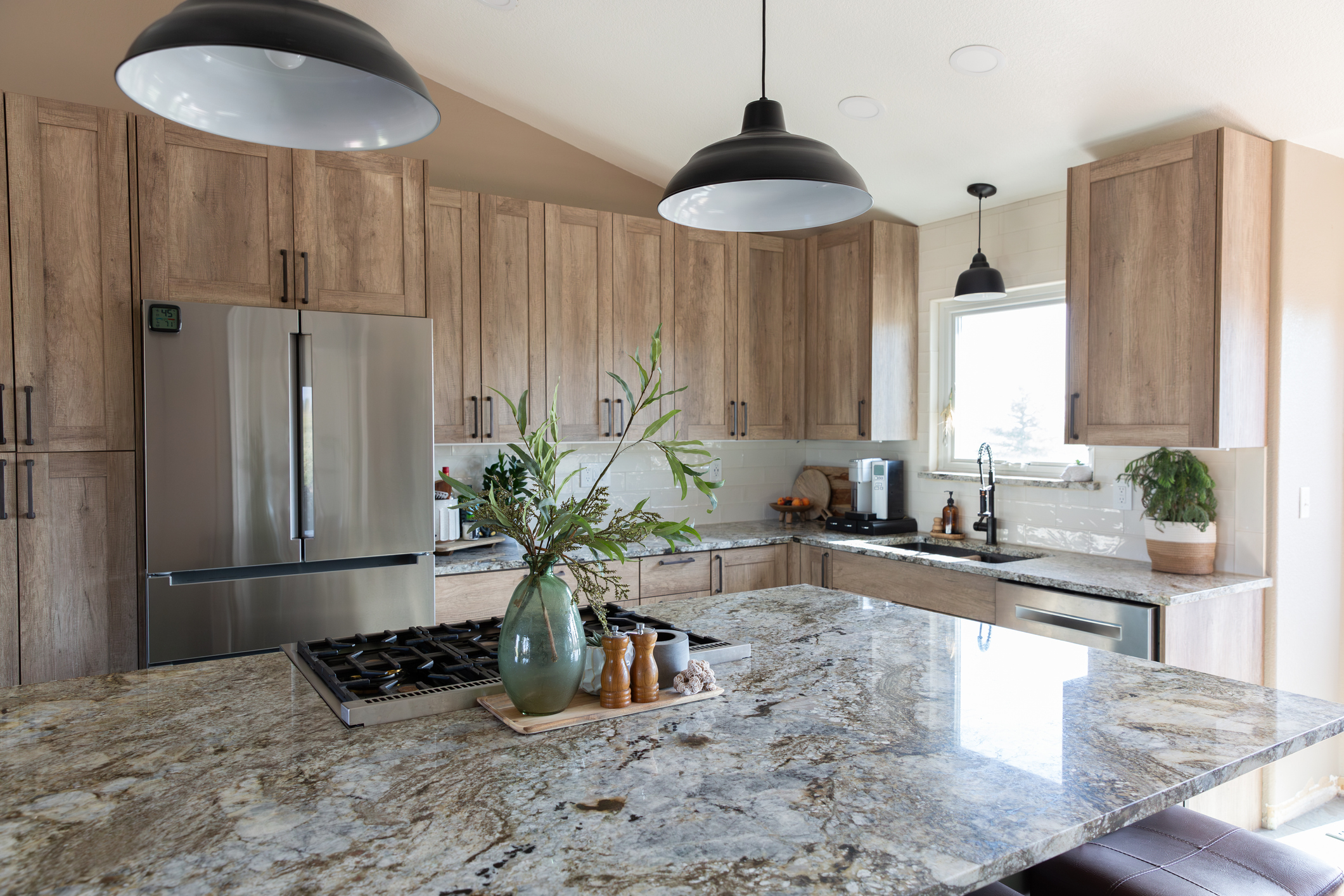
Quartz is one of the most popular countertop materials in Malaysia, and for good reason: it’s durable, relatively low maintenance, and available in a wide range of colours and patterns, including convincing marble and granite lookalikes.
Key properties of quartz:
- Very hard surface (7 on the Mohs hardness scale)
- Non-porous when properly manufactured
- Consistent colour and pattern (engineered, not natural variation)
- Available in thicker slabs (15-30mm), giving a substantial feel on countertops
- Wide range of finishes: polished, matte, honed, textured
- Generally more affordable than sintered stone at comparable quality
Sintered Stone vs Quartz: The Real Differences
Most comparison articles list specs side by side and leave it at that. Here’s what the specs actually mean in practice, especially in Malaysia’s climate and building context.
Heat Resistance
This is the biggest practical difference. Sintered stone handles direct heat without damage. You can place a hot pan straight from the stove onto a sintered stone countertop or install it next to a fireplace feature wall without worry.
Quartz can’t do this. The resin binder starts to discolour or crack at sustained temperatures above 150°C. In practice, you still need trivets and heat pads with quartz surfaces. This is especially relevant in Malaysian kitchens where wok cooking generates intense, concentrated heat.
For wall panel applications, heat resistance matters less, but it becomes relevant around kitchen splashbacks, barbecue areas, and any surface near heat sources.
Verdict: Sintered stone wins clearly on heat resistance.
UV and Outdoor Suitability
Malaysia’s tropical sun is brutal on materials. Quartz is strictly an indoor material because the resin binder degrades under prolonged UV exposure, causing yellowing and surface damage over time. If you’ve ever seen a quartz surface near a large window start to look slightly off-colour after a few years, this is why.
Sintered stone is fully UV stable. It can be used outdoors, on balcony feature walls, al fresco dining areas, and building facades without any concern about colour fading or material breakdown. We’ve specified sintered stone on sun-facing feature walls in Malaysian projects and seen zero discolouration even after extended exposure.
For architects and designers working on Malaysian projects where indoor-outdoor living is a major design theme (and it usually is), this distinction alone often makes the decision.
Verdict: Sintered stone is the only option for any outdoor or high-UV application.
Scratch and Stain Resistance
Both materials are resistant to scratches and stains in everyday use. Quartz scores 7 on the Mohs hardness scale. Sintered stone scores 6-7 depending on the grade, but its lack of resin means it resists chemical staining better than quartz.
Strong chemicals (acetone, bleach, aggressive degreasers) can damage quartz resin over time. Sintered stone is virtually chemical-proof.
In a practical Malaysian context: if you’re using the surface in a commercial kitchen, a salon, a lab, or any space where chemical contact is likely, sintered stone is safer. For a typical home kitchen or feature wall, both perform well.
Verdict: Slight edge to sintered stone for chemical resistance; roughly equal for everyday scratch resistance.
Weight and Thickness
This is where the application type matters a lot, and where the wall panel angle changes the conversation.
Quartz slabs are typically 15-30mm thick and fairly heavy (roughly 50 kg/m² at 20mm). That’s perfect for countertops where you want a substantial, solid feel. But for wall panels and vertical applications, that weight becomes a problem, especially on partition walls or elevated installations where structural load is a concern.
Sintered stone is available in thinner formats (as thin as 3-6mm for wall panel applications), bringing the weight down to approximately 15 kg/m² at 6mm thickness. For context, here’s how that stacks up:
| Material | Typical Thickness | Weight per m² |
|---|---|---|
| Sintered stone wall panel | 6mm | ~15 kg |
| Standard ceramic tile | 10mm | ~20 kg |
| Quartz slab | 20mm | ~50 kg |
| Natural granite slab | 20mm | ~54 kg |
At 15 kg/m², sintered stone wall panels generally don’t require structural reinforcement on standard plasterboard walls in Malaysian residential and commercial projects. In our installations, adhesive-only mounting at 6mm thickness works reliably on standard walls without any issues. Granite wall cladding, by contrast, usually requires mechanical fixing because adhesive alone is rarely adequate at that weight.
Sintered stone is also available in large-format panels up to 1,600 x 3,200mm, meaning fewer joints and a cleaner look on feature walls. This is one reason sintered stone has become the preferred material for wall panel and architectural finishing applications in Malaysia.
Verdict: Sintered stone for walls, cladding, and vertical surfaces. Quartz for countertops and horizontal surfaces where thickness adds value.
Aesthetic Range
Quartz has the edge here. Because it’s engineered with pigments and resins, manufacturers can create a huge variety of colours, veining patterns, and finishes. The marble-look quartz slabs available in Malaysia are especially popular and genuinely convincing.
Sintered stone offers a more refined but narrower aesthetic range. Expect natural stone textures (marble, granite, concrete, slate looks) in muted, sophisticated tones. The technology for full-body veining in sintered stone has improved significantly, but quartz still offers more variety.
That said, for premium architectural projects where the goal is understated elegance rather than bold patterns, sintered stone’s natural aesthetic often works better, particularly on large-format wall panels where subtle texture reads more convincingly than busy veining.
Verdict: Quartz for variety and bold patterns. Sintered stone for understated, premium-looking surfaces.
Price in Malaysia
Quartz is generally more affordable. As of 2026, entry-level engineered quartz in Malaysia starts around RM150-250 per square foot for countertops. Mid-range options sit around RM250-450.
Sintered stone spans a wider price range than people expect: value lines start around RM110 to RM150 per square foot installed, while premium imported brands run RM300 to RM500+ per square foot depending on brand, thickness, and finish. Thinner wall panel formats can be more cost-effective per square metre than full-thickness countertop slabs.
For a full tier-by-tier breakdown of what sintered stone costs right now, see our sintered stone price guide for Malaysia.
For wall panel applications specifically, the cost equation shifts. Sintered stone wall panels (like Luca. StoneX) are purpose-built for vertical installation at appropriate thicknesses, which brings the price closer to (and sometimes below) thick-slab quartz alternatives when you account for installation, structural support, and weight considerations. This is something we see frequently when quoting wall panel projects: the material cost looks higher, but the total installed cost often comes in comparable or lower.
Other major sintered stone brands available in Malaysia include Laminam, Neolith, and Dekton. Most of these are primarily marketed for countertops and horizontal surfaces. Walton’s Luca. StoneX is positioned specifically for wall panel and architectural finishing applications, which means the product format, thickness options, and installation guidance are tailored for vertical use from the start.
Verdict: Quartz is more affordable for countertops. For wall panels, sintered stone can be more cost-effective when you factor in the full installation picture.
Quick Comparison Table
| Feature | Sintered Stone | Quartz |
|---|---|---|
| Heat resistance | Excellent (up to 1,200°C) | Moderate (damage above ~150°C) |
| UV stability | Fully UV stable | Indoor use only |
| Scratch resistance | High | High |
| Chemical resistance | Excellent | Good (resin can be affected) |
| Typical thickness | 3-12mm (walls) / 12-20mm (countertops) | 15-30mm |
| Weight per m² | Lower (thin format advantage) | Higher |
| Aesthetic variety | Refined, natural stone looks | Wide range, bold patterns available |
| Price range (MY) | RM110-500+/sqft (tier dependent) | RM150-450/sqft |
| Best for | Walls, feature surfaces, outdoor, high-heat areas | Countertops, vanity tops, indoor furniture |
| Outdoor suitable | Yes | No |
| Maintenance | Minimal, no sealing needed | Low, avoid harsh chemicals |
Pros and Cons at a Glance
Sintered stone pros: UV stable, heat resistant to 1,200°C, no sealing required, thin-format options suitable for wall panels, chemical resistant, consistent pattern across large surfaces.
Sintered stone cons: Higher price point, narrower aesthetic variety than quartz, can be brittle at thinner formats if mishandled during installation, fewer Malaysian showrooms stocking it compared to quartz.
Quartz pros: Affordable premium option, huge range of colours and patterns, consistent pattern, non-porous when well-manufactured, widely available in Malaysian stone and surface showrooms.
Quartz cons: Indoor use only (resin degrades in UV), not heat tolerant above ~150°C, heavier slabs less suitable for wall applications, can be damaged by harsh chemicals over time.
When to Choose Sintered Stone
Sintered stone is the stronger choice when your project involves:
- Feature walls and wall panelling where weight matters and thin-format installation is preferred
- Outdoor or semi-outdoor surfaces (balconies, al fresco areas, facades) that face direct sunlight
- Commercial kitchens or food prep areas where heat contact is frequent
- Premium architectural projects where you want a natural stone look without the maintenance or weight of real stone
- Spaces where chemical exposure is likely (salons, clinics, labs)
For wall panel and interior finishing projects in Malaysia, sintered stone surfaces like the Luca. StoneX range offer the durability and aesthetics of stone in a format designed specifically for vertical and ceiling applications.
When to Choose Quartz
Quartz makes more sense when you need:
- Kitchen countertops where thickness and a solid feel are important
- Bathroom vanity tops for indoor wet areas
- Affordable premium look where budget matters more than heat/UV performance
- Bold or dramatic patterns that sintered stone doesn’t currently offer
- Standard residential projects with no outdoor or high-heat requirements
For projects where the decision is at the category level (which type of wall cladding to use, not which specific stone product), see our broader wall cladding Malaysia guide covering six material categories with indicative cost ranges and Malaysian application notes.
What About Porcelain?
Porcelain slabs (sometimes called porcelain stoneware or large-format porcelain tile) are another surface material that often gets compared to sintered stone. They’re made by pressing refined clay and minerals at high temperature, similar in principle to sintered stone, but typically at slightly lower temperatures and pressures.
Where porcelain matches sintered stone:
- Non-porous, no sealing required
- UV stable for outdoor use
- Available in thin large-format slabs suitable for wall cladding
Where sintered stone outperforms porcelain:
- Harder surface with better scratch resistance in high-traffic areas
- Denser body with better impact resistance
- More consistent full-body colour on premium grades
Where porcelain may win:
- Lower price point at comparable sizes
- Wider availability in local Malaysian tile showrooms
- Generally easier to source for small residential projects
For high-specification architectural projects and commercial interiors where durability over 10 to 15 years matters more than upfront cost, sintered stone is usually the stronger choice. For straightforward residential walls or budget-conscious projects, porcelain can be a competent alternative.
Sintered Stone vs Granite
Granite is the traditional premium natural stone, and it still has loyal fans. But it’s losing ground in Malaysian interior projects for specific, practical reasons.
Weight: Natural granite is roughly 54 kg/m² at 20mm thickness. Sintered stone wall panels at 6mm are closer to 15 kg/m². For wall cladding in Malaysian residential and commercial projects, this weight difference determines whether you need structural reinforcement, mechanical fixing, or whether a simple adhesive installation is safe.
Porosity: Granite is porous. It requires sealing on installation and re-sealing every 1 to 2 years in wet area applications. Sintered stone never needs sealing.
Pattern consistency: Granite’s character comes from its natural variation. If you want predictable, repeatable pattern across large wall surfaces, sintered stone is engineered for that. If you want unique organic variation, granite still wins.
Price: In Malaysia, natural granite wall cladding typically runs RM150 to RM400 per square foot installed, depending on the grade and origin. Sintered stone wall panels sit in a similar bracket (RM200 to RM500+ installed), but maintenance costs over 10 years favour sintered stone because of no sealing requirement.
UV and heat: Both handle sun and heat well. Granite can crack under extreme thermal shock; sintered stone handles direct thermal cycling better.
Verdict: For wall panels and architectural finishes in Malaysia, sintered stone is usually the better call. For a statement natural stone countertop where character matters more than maintenance, granite still holds its ground.
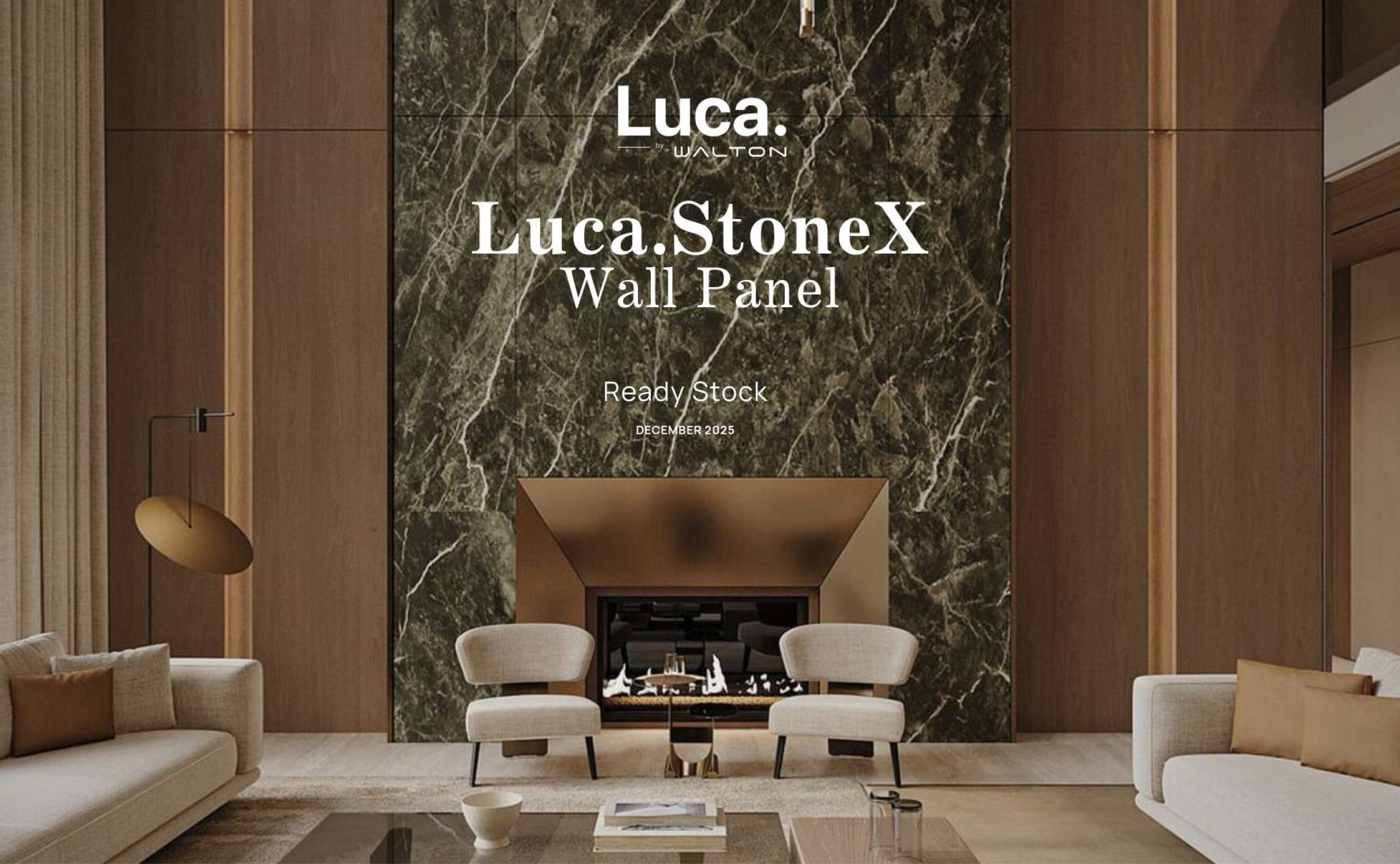
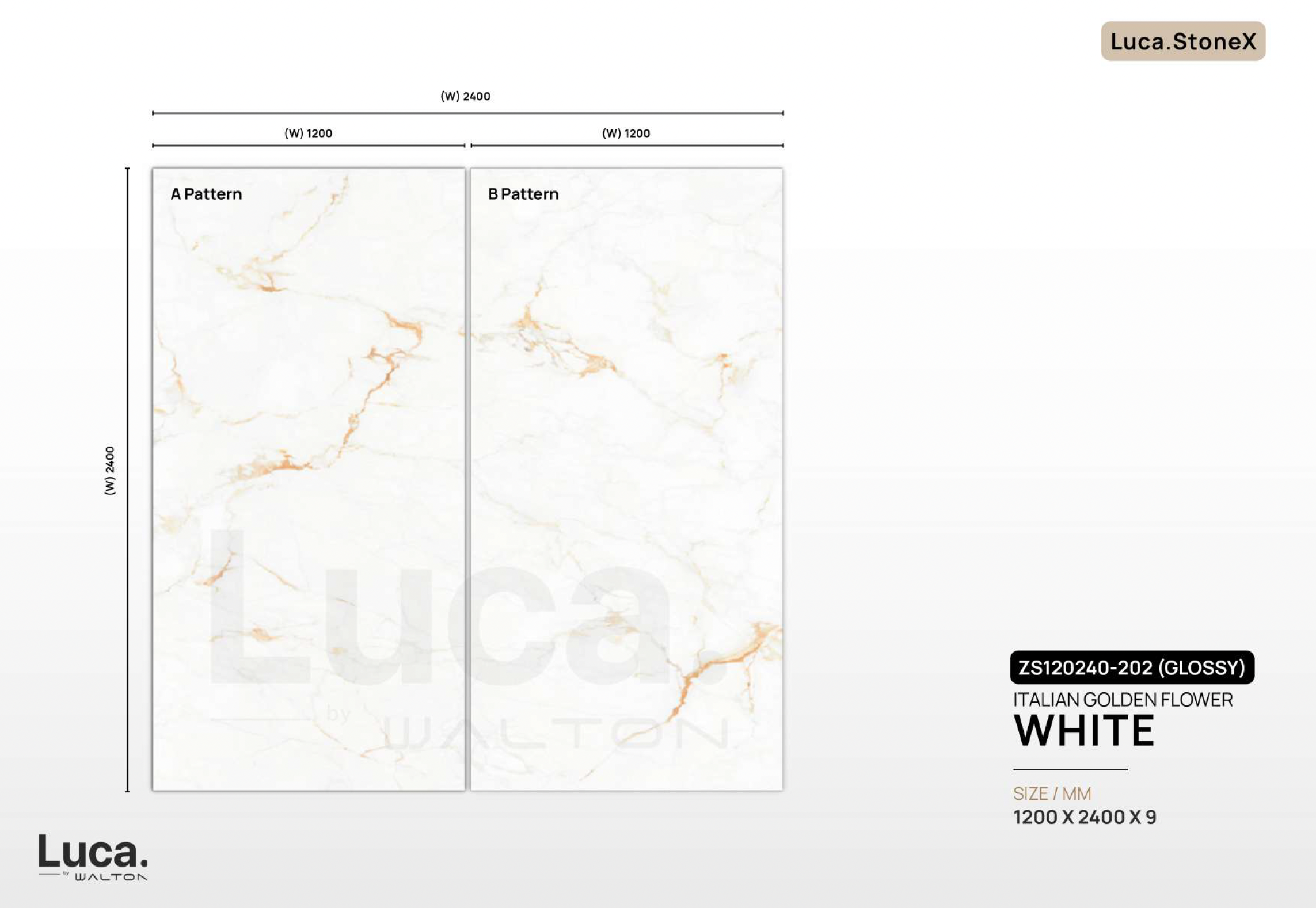
Where can I see sintered stone wall panels in Malaysia?
Walton Interiors offers the Luca. StoneX sintered stone surface as part of their wall panel range. You can contact Walton Interiors to arrange a showroom visit or request material samples.
About the Author
Kayden Ang is the Founder of Walton Interiors, with over 15 years of experience in the interior and architecture industry in Malaysia. He works closely with architects, designers, and contractors to specify wall panel and architectural finishing materials for residential and commercial projects across the country. For material consultation or project enquiries, get in touch with the Walton team.